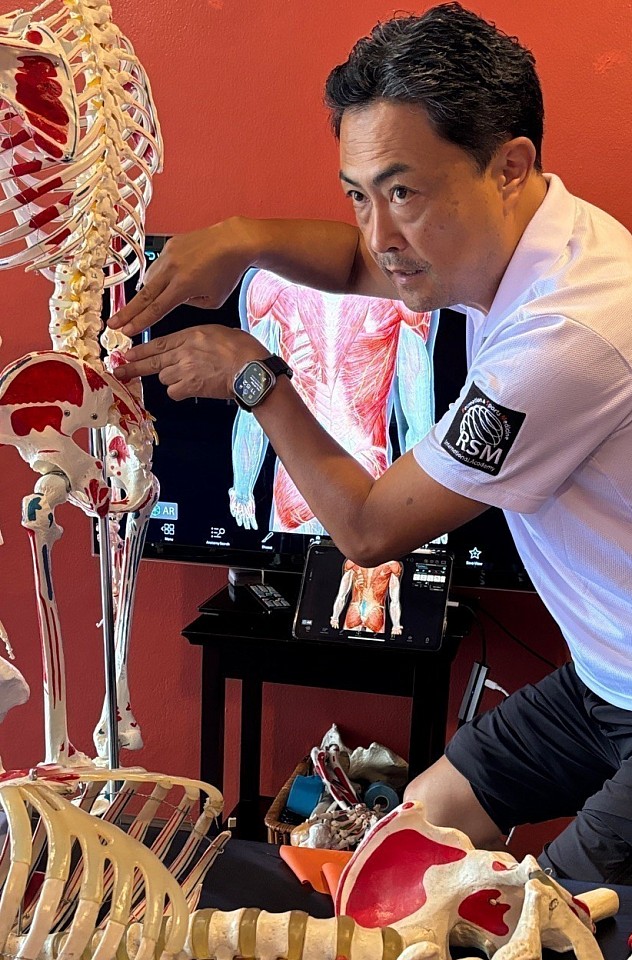
As a Physiotherapist from Germany with years of clinical experience in rehabilitation, I have always been cautious about where I invest my time for continuing education. At this stage in my career, looking to refine my hands-on skills for a transition into more specialized private practice, I have little patience for fluff. I joined the Orthopedic Massage Course for Spine Mobility and Breathing at RSM International Academy after completing their recommended sequence of Trigger Point, Deep Tissue, and Sports Massage modules.
To be honest, after weeks of intensive training, I was exhausted. I questioned whether a weekend course could truly add value to my medical background. I am relieved I stuck with it, because this training filled the practical gaps that university education often leaves wide open. It stands as the most clinically relevant manual therapy training I have encountered.
Anatomy Re-Imagined
I entered the room expecting to learn a few soft tissue releases. Instead, I found a curriculum that rivaled advanced biomechanics seminars. Hironori Ikeda (MSc Sports Medicine) presented a comprehensive introduction to orthopedic assessment skills that forced me to rethink how I view spinal function.
We didn't just review static anatomy; we dissected movement. Using hundreds of detailed diagrams and fascia-layer visuals, we analyzed lumbar, thoracic, and cervical mechanics segment by segment. This practical application of anatomy knowledge for orthopedic massage was refreshing. It took the theoretical knowledge I had from physio school and translated it into palpable, treatable reality.
The Mechanics of Breathing
The most significant "aha" moment for me was the rigorous analysis of breathing mechanics. In standard rehabilitation, we often treat back pain and breathing exercises separately. This course integrated them seamlessly.
We examined case studies in orthopedic massage therapy demonstrating how a rigid thoracic cage or dysfunctional diaphragm directly compromises hip mobility and cervical alignment. Learning to trace the kinetic chain from a rib restriction to a lumbar pathology changed my diagnostic approach immediately. It provided a mechanical explanation for chronic issues that I had previously struggled to resolve with standard exercises.
Evidence-Based Treatment Planning
What separates this course from generic workshops is the focus on strategy. It wasn't about memorizing a routine; it was about developing treatment plans in orthopedic massage based on assessment.
I finally understood the role of fascia in orthopedic massage—not as a buzzword, but as a critical structural component that dictates joint play. By combining the palpation precision from the Trigger Point course with these new orthopedic insights, I felt like I finally had a complete system. It bridged the gap between "medical diagnosis" and "manual correction."
Safe, Controlled Mobilization
As a medical professional, I am wary of high-velocity manipulations (HVLA) outside of a chiropractic setting. I was pleased to find that this course focuses on LVLA (Low Velocity Low Amplitude) mobilization.
These orthopedic massage techniques are safe, effective, and blend perfectly with soft tissue work. They allow us to mobilize stiff joints and restore range of motion without the risks associated with forceful thrusts. This approach is invaluable for working with elderly patients, post-op clients, or athletes who need precision rather than power. It felt safer and more applicable than many theoretical workshops I’ve attended in Europe.
The Future of Our Profession
A critical discussion during the course centered on the changing landscape of therapy. With patients now accessing rehab exercises via apps and YouTube, our value as clinicians lies in our ability to assess complex patterns that an algorithm cannot.
Mastering the assessment protocols used in orthopedic massage ensures that we remain indispensable. It allows us to offer a level of specificity and manual intervention that technology cannot replicate. For someone mid-career, this is the key to longevity and relevance in a crowded market.
A Standard for Pros
The learning environment was professional and rigorous, shared with other physiotherapists and sports trainers. The feedback was direct and clinical. Hironori Ikeda’s ability to teach complex orthopedic concepts with such clarity is a testament to his academic and clinical background.
Looking back, the Orthopedic Massage and Spine Mobility training
was a pivotal moment in my professional development. It corrected long-held misunderstandings and gave me a renewed passion for manual therapy. If you are a medical professional looking to transition into a more hands-on role or simply want to upgrade your clinical toolkit, this advanced spinal course
is essential. It is evidence-based, practical, and deeply effective.